There is something undeniably special about the connection between humans and horses. For thousands of years, horses have been partners in work, sport, and adventure. In more recent decades, that relationship has also become a powerful tool in therapeutic and educational settings, and adaptive riding is one of the most accessible and meaningful expressions of that partnership.
If you’ve heard about adaptive riding and are wondering whether it might be right for your child, this guide covers everything you need to know: what it is, how it works, who benefits, and what to expect.
Defining Adaptive Riding
Adaptive riding is a horsemanship program specifically designed and modified for individuals with physical, cognitive, emotional, or developmental disabilities. It is often called “therapeutic riding” as well, though the two terms have some nuances depending on the program structure.
Unlike hippotherapy, which is a clinical intervention provided by a licensed therapist who uses the horse’s movement as a therapeutic tool, adaptive riding is primarily an equestrian education program. The focus is on teaching participants to ride and care for horses, with the program structure and instruction adapted to accommodate a wide range of abilities.
At Strides Pediatric Therapy, our adaptive riding program is designed for children with disabilities. Participants learn to tack (prepare the horse for riding) and ride, gaining physical, emotional, cognitive, and social benefits along the way.
The Physical Benefits of Adaptive Riding
Riding a horse is a full-body physical experience, and for children with disabilities, this experience offers benefits that are difficult to replicate in any other setting.
Core Strength and Postural Control
When a child sits astride a moving horse, their body must continuously make small adjustments to maintain balance. This constant, dynamic movement engages the core, trunk, and postural muscles in ways that are both therapeutic and natural. For children with conditions like cerebral palsy or hypotonia, this is especially significant.
Balance and Coordination
The rhythmic movement of the horse challenges and develops the vestibular system, which governs balance and spatial orientation. Over time, many riders show improved balance, coordination, and body awareness that carry over into their daily lives.
Sensory Input
The warmth, texture, movement, and smell of a horse provide rich multisensory input that can be deeply regulating for children with sensory processing differences. The repetitive rhythm of the horse’s walk, in particular, is often described as organizing and calming.
Range of Motion and Muscle Flexibility
Riding engages muscles across the legs, hips, and spine, contributing to improved range of motion and flexibility over time. This is particularly relevant for children who have spasticity or limited physical activity.
Cognitive and Academic Benefits
Adaptive riding is a cognitively rich activity. Riders must learn to follow multi-step instructions, remember and apply riding techniques, problem-solve in real time, and develop their understanding of cause and effect as they learn how their body position and cues affect the horse’s movement.
For children who struggle with attention or executive functioning, the highly engaging nature of equine interactions can make it easier to sustain focus and engage with learning. Many families report that the concepts practiced in adaptive riding translate to improvements in attention and task persistence in other settings.
Emotional and Social Benefits
Horses are social animals with complex emotional lives, and they are remarkably sensitive to the emotional states of the humans around them. This sensitivity creates a unique therapeutic dynamic.
Children who struggle to connect with peers often find it easier to connect with horses. The non-judgmental nature of the horse-human relationship provides a safe space to practice relationship skills, emotional expression, and self-regulation. The confidence that comes from managing and directing a large, powerful animal is also deeply meaningful for children who often feel powerless or limited.
Group riding sessions offer additional opportunities for social interaction, turn-taking, and shared experience.
Who Is Adaptive Riding For?
Our adaptive riding program at Strides serves children ages 2 through 21 with a variety of diagnoses and needs, including:
- Autism spectrum disorder
- Cerebral palsy
- Down syndrome
- Intellectual disabilities
- ADHD
- Anxiety and emotional regulation challenges
- Sensory processing disorders
- Physical disabilities affecting mobility or coordination
- Developmental delays
Not every child is automatically a candidate for adaptive riding. A screening process helps determine whether riding is safe and appropriate for a given child’s needs. Factors like medical stability, behavioral safety, and the child’s ability to tolerate the sensory experience of riding are considered. Our team will work with your family to make this determination thoughtfully.
What a Session at Strides Looks Like
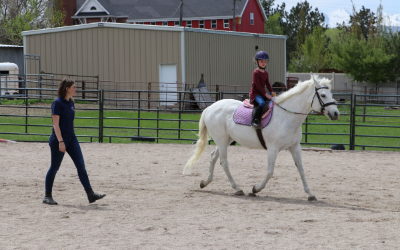
Our adaptive riding sessions take place at our equestrian facility, where our team of licensed professionals and well-trained horses work together to create a safe, enriching experience.
A typical session begins with preparation: greeting and grooming the horse, learning to tack up, and developing a relationship with the animal before mounting. This ground work is itself therapeutic. Then comes riding, with a therapist or certified instructor guiding the session and volunteers providing additional support as needed.
Sessions are structured around individual goals, which may be physical, cognitive, emotional, or social depending on the child’s needs. Our four-legged team members are selected and trained specifically for this work and are true partners in the therapeutic process.
How Adaptive Riding Complements Other Therapies
Adaptive riding is a wonderful complement to other therapies your child may already be receiving. The physical gains support and reinforce work done in physical therapy. The sensory-rich environment of the barn is a natural extension of occupational therapy. And the social and emotional benefits align with goals in mental health therapy and recreational therapy.
Having all of these services available at one location, as we do at Strides, means your child’s care team can communicate and coordinate in ways that amplify results.
Getting Started with Adaptive Riding
If adaptive riding sounds like it might be a good fit for your child, we would love to talk with you about it. Our team can answer your questions, walk you through the screening process, and help you understand what to expect.
Contact us today to learn more or schedule a visit. We look forward to welcoming your family to our barn.