
Pediatric Feeding Therapy in Utah
Helping Children Eat With Confidence and Comfort

Every parent wants mealtimes to be simple and joyful. But when a child struggles with eating, refusing food, gagging at textures, taking a long time to finish meals, or falling behind in weight, mealtimes can quickly become a source of stress and worry.
At Strides Pediatric Therapy, we understand how challenging feeding difficulties can be. Whether your child avoids certain textures, struggles to chew or swallow, or refuses to eat all but a few foods, you’re not alone.
Our team offers compassionate, evidence-based pediatric feeding therapy in Utah to support children and families through these challenges.
Why Feeding Therapy Matters
Feeding isn’t just about nutrition, it’s about comfort, safety, and trust. For many children, feeding difficulties are connected to underlying developmental needs. That might include:
- Delayed oral motor development
- Sensory feeding challenges
- Medical issues like reflux or allergies
- Past negative feeding experiences
- Anxiety or behavioral factors
Feeding therapy helps address these root causes. Our therapists work closely with each child to build the skills they need to eat safely and confidently, at their own pace.
Common Feeding Difficulties We Treat
- Picky eating or limited food variety
- Gagging or choking during meals
- Difficulty chewing or managing textures
- Food refusal or avoidance
- Poor weight gain or growth delays
- Transition challenges (bottle to solids, purees to textures)
- Taking a long time to finish meals
We also provide specialized support for infant feeding therapy, helping babies who have trouble latching, sucking, or transitioning to solids.
Every child’s feeding story is different. That’s why we take time to understand your child’s history, needs, and family routines before we begin treatment.
A Family-Centered Approach That Builds Trust
Feeding challenges can impact the whole family. That’s why we include caregivers every step of the way. We don’t just focus on what your child eats, we focus on how they feel when they eat and how you feel as a parent trying to help.
We start by creating a calm, positive environment where your child feels safe to explore. Then, through small, supported steps, we build feeding confidence together.
Whether we’re introducing new textures, practicing chewing skills, or addressing anxiety, the goal is always the same: to help your child enjoy mealtimes and gain the nutrition they need to grow and thrive.

Supporting Oral Motor and Sensory Development
Feeding is a complex skill that depends on strong oral motor development and sensory integration. For many children, eating difficulties are rooted in how their body processes food textures, temperatures, and movements in the mouth.
That’s why our feeding therapy includes:
- Oral motor strengthening (lips, tongue, jaw)
- Texture exploration and desensitization
- Chewing coordination and swallowing practice
- Structured exposure to new foods
- Sensory regulation techniques
- Mealtime structure and routine
When a child receives support for both motor and sensory feeding challenges, they’re more likely to feel in control and less likely to feel overwhelmed at meals.
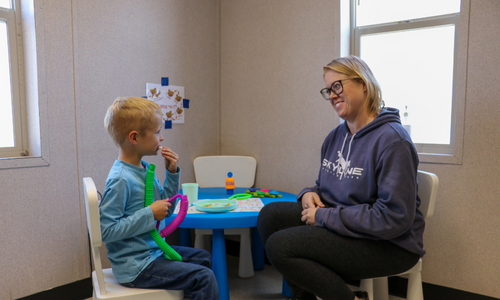

Feeding Therapy with Occupational, Speech, and Mental Health Therapy
Feeding doesn’t exist in a vacuum. Eating difficulties can stem from challenges in several developmental areas. That’s why we take an integrated, collaborative approach.
Your feeding therapy team may consist of:
- Occupational therapists to address sensory processing, fine motor skills, and posture
- Speech-language pathologists to support safe swallowing, oral motor movements, and communication
- Mental Health Therapists to support anxiety, frustration tolerance, or behavioral challenges related to earing
When your child’s therapy is coordinated across services, skills are reinforced and progress becomes more sustainable. Your child may see these different therapists separately, or together in a co-treatment session.
What Parents Can Expect From a Feeding Evaluation
- A detailed parent interview to understand concerns and goals
- Observation of a typical meal or snack
- Assessment of oral motor function and sensory responses
- Review of weight, growth, and feeding history
- Standardized assessments to get a picture of the child’s functioning overall
When to Reach Out
If you child is:
- Refusing food or meals
- Eating a limited number of foods
- Eliminating foods they used to eat
- Struggling with weight gain or growth
- Avoiding textures or gagging frequently
- Relying only on purees or liquids
- Struggling to transition off of bottle or sippy cup
- Creating stress around mealtime for the family

Let's Take the First Step Together
We know how overwhelming it can feel when feeding becomes a daily struggle. But you don’t have to endure this alone, and your child doesn’t have to stay stuck.
Feeding therapy can open the door to calmer meals, better nutrition, and more confidence for your child and for you. And it all starts with one small step.
Contact Strides Pediatric Therapy to schedule a feeding evaluation or learn more about our pediatric feeding therapy in Utah.
Together, we’ll help your child build the skills they need to eat with ease, joy, and confidence.

Frequently Asked Questions
What is pediatric feeding therapy?
Pediatric feeding therapy helps children who struggle with textures, chewing, swallowing, or eating a limited range of foods build the skills they need to eat safely and confidently. Therapy focuses on comfort, safety, and trust at mealtimes, not just nutrition.
What feeding challenges does feeding therapy address?
Our feeding therapists support children who avoid certain textures, struggle to chew or swallow, or eat only a narrow range of foods. Many of these challenges connect back to sensory, motor, or developmental needs, and therapy addresses those root causes rather than just what’s happening at the table.
Do you work with infants who have feeding difficulties?
Yes. We provide specialized support for infants who have trouble latching, sucking, or transitioning to solids.
What causes feeding difficulties in children?
Feeding difficulties can stem from sensory sensitivities, motor challenges, or behavioral patterns around mealtimes, and often it’s a combination of all three. Our therapists look at what’s really driving the difficulty before building a plan, rather than addressing only what’s happening at the table.
Which other therapies work alongside feeding therapy?
Feeding therapy often works alongside occupational therapy, speech therapy, and mental health therapy, since feeding challenges can involve physical, sensory, and emotional factors together. Strides coordinates care across these services so your child gets consistent support.
Is feeding therapy covered by insurance?
Coverage for feeding therapy depends on your specific insurance plan. Call our office at (801) 335-4699 and our team can verify your benefits before your child’s first appointment. You can also review our pricing and insurance page for other accepted plans.