
Pediatric Occupational Therapy in Utah
Helping Children Across Utah Build Skills for Everyday Life

Children experience the world in many different ways. Some children struggle with fine motor tasks, daily routines, sensory processing, or emotional regulation. Pediatric occupational therapy helps children develop the skills they need to participate fully in everyday activities at home, school, and in their communities.
At Strides Pediatric Therapy, we provide occupational therapy in Utah that meets children where they are and supports them as they grow.
We partner with families across Utah, from early childhood through adolescence and even young adulthood (up to age 21) to help children navigate sensory challenges, develop fine motor skills, and build independence at home, school, and beyond.
What is Pediatric Occupational Therapy?
Pediatric occupational therapy focuses on helping children develop the physical, sensory, cognitive, and emotional skills needed for everyday activities. These activities include dressing, feeding, making and keeping friends, handwriting, playing, following routines, managing emotions, and participating in school or social environments.
Pediatric OT is about giving children tools, strategies, and confidence so they can engage more comfortably and independently in their daily lives.
Families often look for occupational therapy for kids, children’s occupational therapy, or a child occupational therapist when everyday tasks start to feel harder than they should. Whatever you call it, kids occupational therapy at Strides Pediatric Therapy works toward the same goal: helping your child build the skills for self-care, play, learning, and handwriting. Our pediatric occupational therapists provide occupational therapy services for kids with autism, ADHD, sensory issues, and developmental delays, as well as children who have no diagnosis at all.
How Strides Pediatric Therapy Approaches Occupational Therapy
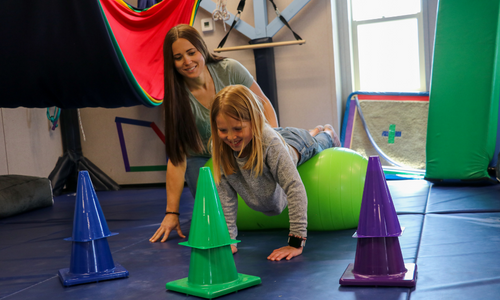
At Strides Pediatric Therapy, occupational therapy is never one-size-fits-all. Every child brings their own strengths, challenges, and personality, and therapy should reflect that. Our approach to occupational therapy is child-centered, family-guided, and grounded in evidence-based practice. We take time to understand each child’s interests, daily routines, and areas where they may need extra support, allowing us to create individualized therapy plans that support executive functioning, social skills, fine motor and daily living skills development, along with sensory processing support for children, in a way that feels natural and engaging.
Parents and caregivers play an essential role in the therapy process. Our team of therapists collaborate closely with families to share insight into the reasons behind challenges, as well as strategies that can be carried over into everyday routines at home, school, and in the community. As a provider of OT for kids in Utah, we focus on helping children build confidence, emotional regulation, and independence, with therapy plans that remain flexible and responsive as children grow and reach new milestones.
Common Developmental, Sensory, and Behavioral Challenges We Address
We support children with a broad range of needs. Some common areas addressed through occupational therapy including:
Sensory Processing Differences
Children who are oversensitive or under-responsive to sensory input may have trouble with clothing textures, loud environments, certain smells, textures and tastes, crowds, stores, bright lights, hygiene tasks, and more. They may experience motion sickness, or be constantly seeking movement by jumping off couches, head butting and rough play, falling down on purpose, or spinning. OT helps children better interpret sensory input and respond with confidence.
Fine Motor and Daily Living Skills
Executive Functioning Skills
Visual-Perceptual and Coordination Challenges
Emotional Regulation and Behavior Support
Occupational therapy supports children who struggle with frustration, transitions, exaggerated emotional responses, rigid thinking, or behavior that gets in the way of daily life.
Self-Care and Independence
Social and Problem Solving Skills
We work with kids in a unique real-world environment to develop skills for making friends, relating to peers, turn taking, imaginative play, independent play, conflict resolution, and other social nuances that allow them to flourish with their peers and others.
Occupational Therapy for Autism
Many of the children we see at Strides Pediatric Therapy are autistic or are being evaluated for autism, and occupational therapy often plays a central role in their support plan. Our therapists help autistic children build tolerance for sensory input, strengthen fine motor and self-care skills, and develop strategies for emotional regulation and social interaction. We work closely with families to carry these strategies into daily routines at home and at school. Every therapy plan reflects the child in front of us, so sessions target the specific sensory, motor, and social goals that matter most for that child rather than following a fixed program.
Feeding Therapy
Sensory based feeding therapy, done by an occupational therapist, helps address picky eating, food sensitivities/aversions, restrictive eating, ARFID, gagging or vomiting on certain tastes and textures, and trouble moving from liquids to solids in young kids.
Toileting
Occupational therapy at Strides can address a number of toileting concerns such as difficulty potty training, regressions in potty training, frequent accidents, overnight potty training, stooling difficulties, withholding, and inappropriate toileting behaviors.
Occupational Therapy Treatment Methods at Strides
Once we understand your child’s needs, our occupational therapists use evidence-based strategies that connect therapy to real life. Sessions are designed to be engaging, purposeful, and aligned with your child’s goals.
Treatment methods may include:
- Play-based therapy to encourage participation, motivation, and skill practice
- Sensory integration/Sensory Accommodation techniques to support sensory processing and regulation
- Interoception Program to build awareness of body cues to support toileting, eating, sleep, etc.
- Astronaut Training Program that integrates vestibular, visual, and auditory input to support sensory processing, especially related to motion sickness, postural control, attention, and self-regulation.
- Therapeutic Listening Program which is a structured, sound-based occupational therapy program designed to support attention, sensory tolerance and discernment, regulation, and participation in daily routines.
- SOS Feeding Approach that addresses sensory, oral motor, and behavioral factors to support safe and positive eating experiences.
- Get Permission Feeding Approach that utilizes relationship based techniques and respects a child’s autonomy while supporting safe, positive, and developmentally appropriate eating experiences.
- Fine motor activities that build strength, coordination, and hand skills
- Daily living routine coaching to support independence at home and school
- Collaborative family strategies to help progress carry over beyond the clinic
What Families Across Utah Can Expect from OT Sessions
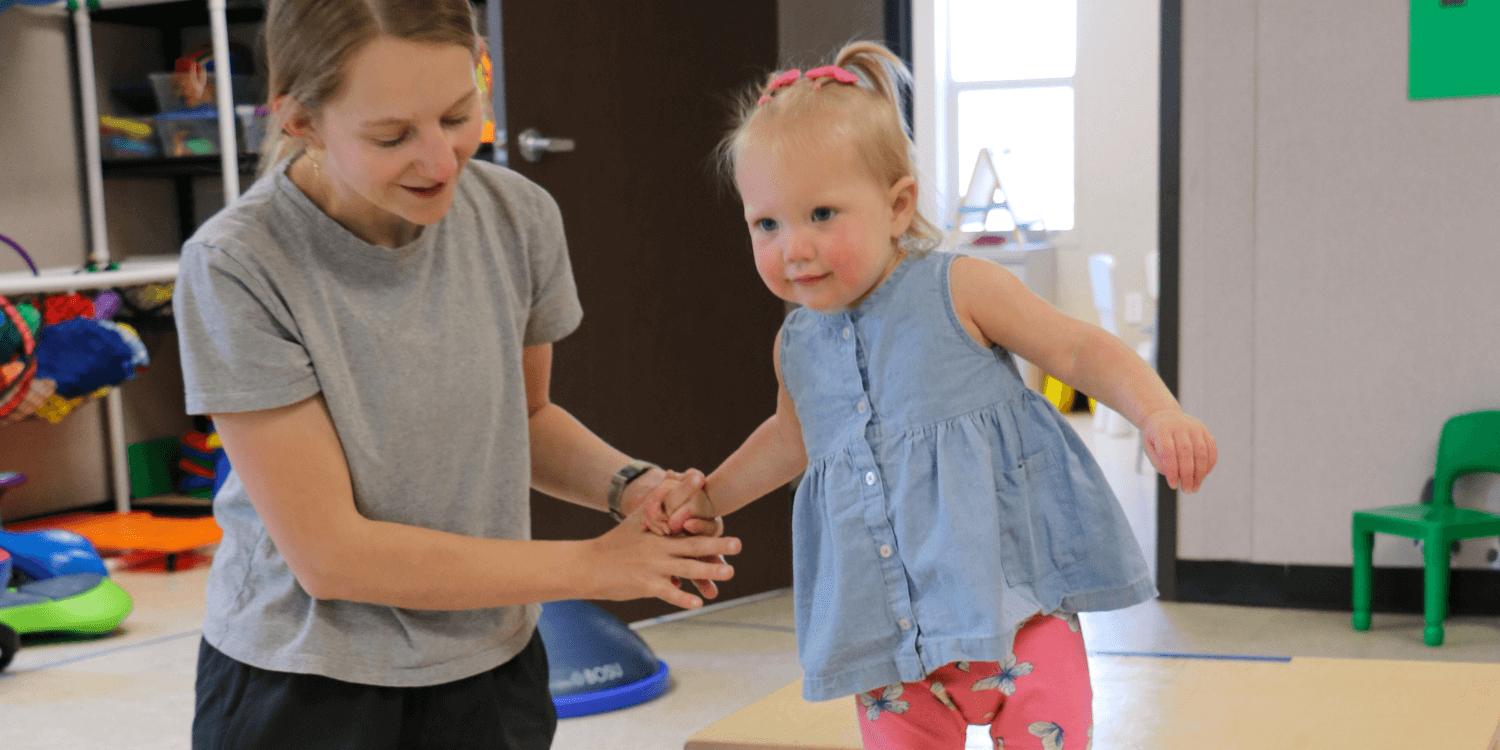
When you bring your child to Strides Pediatric Therapy, you’ll notice a welcoming and supportive environment designed for children and families.
Here’s what to expect:
- A thorough evaluation to identify strengths and areas of need
- Child-centered activity-based sessions
- Clear communication about goals and progress
- Practical strategies to use at home, school, and in daily routines
- A team that listens and partners with you
We focus on your child’s functional success so progress shows up in daily life, not just in therapy sessions.
Benefits for Children in Early Childhood Through Adolescence
Our occupational therapy services support children across various developmental stages:
Early Childhood
Early intervention for young children and toddlers builds foundational motor skills, sensory self-regulation, and confident participation in play and routines.
School-Age Children
OT supports handwriting, organization, classroom participation, social engagement, and self-management of tasks.
Adolescents
Therapy emphasizes independence, executive functioning, coping strategies, and life skills that prepare teens for success in school, work, and community. Therapy helps children feel more confident, capable, and connected to others wherever they are on their developmental journey.
What to Expect at Your Child’s First Appointment
Your first occupational therapy appointment at our clinic begins with an evaluation. This allows our therapist to understand your child’s strengths, challenges, and daily routines.
During the evaluation, you can expect:
- A detailed parent interview
- Standardized and play-based assessments
- Observation of motor, sensory, and functional skills
- Discussion of goals and recommended therapy frequency
After the evaluation, we create a personalized therapy plan and review it with you so you feel informed and confident moving forward.
Parents are encouraged to ask questions and share concerns at every step. Therapy works best when families feel supported and involved.
Why Families Choose Strides Pediatric Therapy

Families across Utah choose Strides Pediatric Therapy because we focus on meaningful progress, compassionate care, and real-world outcomes. Pediatric therapy is designed to feel supportive, practical, and empowering for both children and parents.
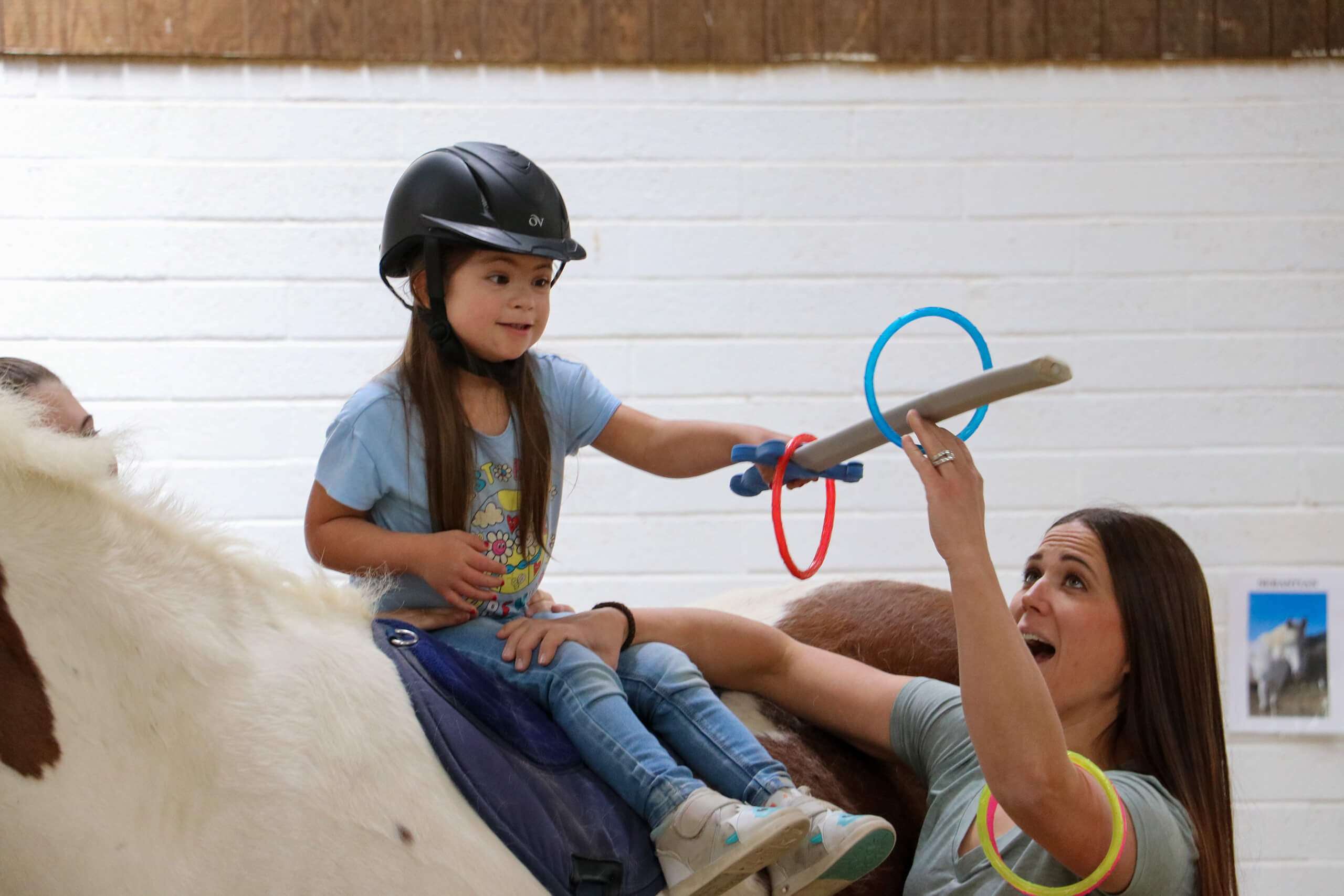
We take a collaborative, family-centered approach, partnering closely with caregivers so strategies carry over into everyday routines at home, school, and in the community. Strides Pediatric Therapy also offers multidisciplinary care under one roof, bringing together occupational therapy, physical therapy, speech therapy, recreational therapy, mental health therapy, and adaptive riding when appropriate. This coordinated approach helps ensure children receive consistent, well-rounded support as they grow. We provide organized, family-centered support through consistent weekly scheduling, transparent communication about insurance coverage and expected costs, and advocacy for you and your child across insurance processes and school-based services, including IEPs.
When challenges begin to impact daily life, early support can make a meaningful difference. Occupational therapy helps children develop practical skills, build confidence, and feel more capable in their everyday routines at home, school, and in their world. Through approaches such as sensory integration therapy for children and therapy for emotional regulation in children, we support skills that help daily life feel more manageable.
If you have concerns about your child’s sensory processing, fine motor skills, daily routines, or emotional regulation, you do not have to navigate this alone. Support starts with understanding, and the right guidance can help your child take steady steps forward.
Families don’t need to wait for a diagnosis or major concern to benefit from occupational therapy support, and it’s never too early or too late to seek support. Schedule an occupational therapy evaluation today and take the first step toward supporting your child’s growth.
Frequently Asked Questions
What does a pediatric occupational therapist do?
A pediatric occupational therapist helps children build the skills they need for everyday activities like dressing, feeding themselves, playing, and handwriting. Through purposeful, play-based activities, therapists work to strengthen fine motor, sensory, and cognitive skills so kids can participate more fully in daily life.
What are signs my child may need occupational therapy?
Consider occupational therapy if your child shows a delay in fine motor skills, has sensory processing concerns, or struggles with age-appropriate self-care tasks like dressing or feeding. These challenges can occur with or without a diagnosis, so a formal diagnosis isn’t required to request an evaluation.
What conditions can occupational therapy help with?
OT commonly supports children with Down syndrome, autism, ADHD, traumatic brain injury, cerebral palsy, and other related conditions. It also helps kids who don’t have a diagnosis but are struggling with fine motor, sensory, or self-care skills.
What happens during an OT evaluation?
An OT evaluation lets our therapists assess your child’s fine motor, sensory, cognitive, and self-care skills to determine whether therapy is appropriate. From there, we build a personalized treatment plan tailored to your child’s specific needs and goals.
How is occupational therapy different from physical therapy?
Occupational therapy focuses on the skills children need for daily activities like dressing, feeding, handwriting, and playing, while physical therapy focuses on movement, coordination, and motor function. Many kids benefit from both, and our therapists coordinate care so each service supports the others.
Is occupational therapy covered by insurance?
Yes. Strides is in-network with Regence BCBS, University of Utah Health, SelectHealth, MultiPlan, EMI, PEHP, Aetna, TriCare, DMBA, and all Medicaid plans, including State Medicaid, Healthy U Medicaid, Molina Medicaid, HealthChoice Medicaid, and SelectHealth Community Care Medicaid. Call our office at (801) 335-4699 to confirm your specific plan’s coverage. See our full pricing and insurance page for details.
Occupational Pediatric Therapy for Families Across Utah
Strides Pediatric Therapy welcomes children from communities across the Wasatch Front and beyond. Our clinic sits in Eagle Mountain, and we work with families across Utah County, Salt Lake County, Tooele County, and more. If you’re looking for pediatric occupational therapy near you, please reach out today.
Strides Pediatric Therapy
18406 W White Quest Dr., Eagle Mountain, UT 84013
M-F 8 AM to 6 PM by appointment